Are Heat Press Machines Worth It?
Heat press machines are worth it for regular transfer projects when the plate size, heat settings, and pressure method suit your work. For a few occasional shirts, an iron may be enough if the transfer instructions allow it.
On this page (8 sections)
- Are heat press machines worth it for home projects?
- What makes a heat press worth the space?
- Do you need a larger heat press?
- Is a heat press worth it for a small business?
- How should you set up and care for a heat press?
- Which mistakes make a heat press poor value?
- When is a heat press not worth buying?
- How should you decide if a heat press is worth it?
Heat press machines are worth it for regular transfer projects when their plate size, heat controls, and pressure method match your work. For a few occasional shirts, an iron may be enough if the transfer instructions allow it.
The biggest benefit is a more repeatable process: you can return to a chosen temperature and follow a set pressing time. That control matters most when you're making matching gifts, replacing supplies, or filling repeat orders.
Are heat press machines worth it for home projects?
A heat press is worth considering for projects you already expect to repeat, such as shirts, sweatshirts, bags, or pillow covers. For 1 or 2 crafts a year, borrowing a press or ordering finished transfers and application services may be simpler.
Plan a few actual projects before choosing equipment. Note the transfer material, artwork dimensions, fabric, and number of items so you buy for a real task.
Flat presses suit flat work, while mugs, tumblers, and hats often need equipment shaped for those items. A shirt press isn't automatically a useful starting point if drinkware is your main interest.
Our guide to heat press machine types, sizes, and top picks explains those formats. Choose the format first, then compare controls and size within it.
Are heat press machines worth it for beginners?
They are worth it for beginners with repeat projects planned, especially when a transfer needs controlled heat. Start with one material and a manageable design so you can learn placement, pressure, and peeling without changing several things at once.
The Cricut EasyPress SE 12x10 has a 12 x 10 in ceramic-coated plate and adjustable heat up to 400°F (205°C). Cricut's Heat Guide supplies time, temperature, and pressing instructions.
Choose it for home crafting when portability and guidance matter more than a fixed press station. It supports HTV, Infusible Ink, and sublimation products, provided your blank and transfer are compatible.
Skip it if you want a machine that clamps the work for you. This handheld format still requires you to apply pressure, so consider your comfort with holding a press during repeated projects.
What makes a heat press worth the space?
A press earns its space when you can set up, press, and clear finished work without crowding the heated area. Measure the whole work zone, including garment handling and a safe resting spot for hot equipment.
Check these points before choosing:
- Design fit: Measure your largest common transfer, including room for placement.
- Pressure method: Decide between applying pressure by hand and using an adjustable clamping press.
- Material needs: Match the required temperature and pressing method to the machine.
- Storage: Consider how often you'll move the press and where it will cool.
- Workload: Count preparation and finishing time as well as pressing time.
The HTVRONT 12x10 Pressure Display Press has a real-time pressure sensor and a screen showing pressure, time, and temperature. Its dual handles give you 2 gripping points while you apply pressure.
Choose this model if you want a visible pressure reading while working on flat crafts. The reading gives you something concrete to monitor between presses, but it doesn't choose the correct pressure for your transfer.
Skip it if you want automatic clamping or find sustained downward pressure uncomfortable. Its insulated safety base, completion beep, and shutoff after 15 minutes of inactivity are useful features, but you still need to manage each press.
Do you need a larger heat press?
A larger press is worth the room when your usual artwork won't fit under a smaller plate in one placement. Buy around design dimensions rather than garment size, since a large shirt can still carry a small chest logo.
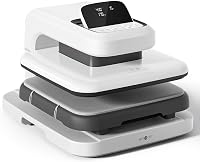
The Fancierstudio Digital Heat Press 15x15 provides a 15 x 15 in pressing area, electronic time and heat controls, and adjustable pressure. Its upward-opening design needs clearance above the work surface.
Choose it for larger flat transfers and a dedicated pressing station. Adjustable pressure lets you set the clamping force for the project rather than supply it by hand throughout the press.
Skip it if you need equipment you can quickly tuck away between occasional crafts. The machine measures 33 x 23 x 20 in, so check your bench dimensions and the space needed to load garments.
This model uses 110 volts and 1800 watts; check that your work area's electrical setup meets its instructions. Follow the transfer's required heat setting rather than treating a machine's maximum temperature as a target.
Read what size heat press you need for help measuring projects. For apparel choices, compare our best heat presses for T-shirts.
Is a heat press worth it for a small business?
A heat press can be worth it when repeat sales cover the full cost of making each item. Owning the equipment doesn't create demand or remove the time spent on design, alignment, and finishing.
Calculate your contribution per item by subtracting blanks, transfers, packaging, selling fees, and a fair allowance for labor from the selling amount. Include spoiled items so your estimate doesn't assume every transfer succeeds.
Divide the equipment and setup cost by that remaining amount to estimate how many sales would repay it. If the number exceeds realistic orders, outsource pressing or delay the machine.
Also check the slowest step in your workflow. A bigger plate won't shorten artwork preparation, and faster pressing won't help much if weeding or packaging takes most of your time.
Our guide to heat presses for a small business compares options for business use. Use how to choose a heat press to match features to the work you expect.
How should you set up and care for a heat press?
Set up a press on a stable, heat-tolerant surface with clear space around it, following the machine's instructions. Keep cords away from the pressing area and leave somewhere safe for the equipment to cool.
Arrange the workflow before heating: blank garments on one side, transfer supplies within reach, and finished items away from the hot plate. Keep children, pets, and loose materials out of the work area.
Confirm the transfer suits the fabric or coated blank before pressing. Sublimation, for example, requires compatible materials; a heat press alone doesn't make ordinary cotton suitable for that process.
Prepare the blank as directed, remove lint where needed, and keep thick seams or zippers from interfering with contact. Prepress only when the transfer instructions call for it.
Record the time, temperature, pressure method, and peel instructions for each material you use. Our guide to using a heat press walks through the process.
Let the press cool before cleaning or storage, and unplug it as instructed. Use the approved cleaning method for its plate coating, since scraping residue with metal tools can damage the surface.
Which mistakes make a heat press poor value?
The most costly mistakes are buying the wrong format and guessing at transfer settings. Both can leave you with equipment that doesn't suit your projects or materials that need replacing.
Avoid these common errors:
- Buying for imagined projects: Start with the items you have a clear plan to make.
- Pressing over bulky seams: Uneven contact can leave parts of a transfer poorly bonded.
- Moving the press during application: Keep it steady to reduce shifting and blurred edges.
- Peeling at the wrong time: Follow hot, warm, or cold peel instructions for the specific transfer.
- Adding heat without checking the cause: Lifting edges can also involve pressure, contact, or material compatibility.
Don't split a large design across several presses unless its instructions support that approach. Overlapping heat exposure can affect parts of the design differently.
For settings, use the transfer supplier's directions alongside the machine instructions and our heat press temperature and time guide. There isn't one setting that suits every vinyl, transfer, and fabric.
When is a heat press not worth buying?
Skip a press when you have few projects, no safe workspace, or no settled transfer method. Borrowing equipment gives you time to learn which format you actually need.
An existing iron can be enough for small, occasional applications if the transfer permits it. Our heat press versus iron comparison explains the tradeoffs before you commit more space and money.
Outsourcing can also suit occasional custom shirts or a short event run. Compare the total finished-item cost with buying equipment, sourcing supplies, and spending your time applying each design.
How should you decide if a heat press is worth it?
Heat press machines are worth it when you can name the projects, fit the workspace, and justify the workload. Choose the Cricut for portable guided crafting, the HTVRONT for pressure feedback, or the Fancierstudio for larger designs and adjustable clamping pressure.
Before ordering, write down your next few projects and the supplies each needs. Use how much a heat press costs to plan the full setup, then buy only the capacity those projects require.
Frequently asked questions
Are heat press machines worth it for beginners?
Heat press machines are worth it for beginners who have repeat projects planned and want dedicated heat controls. Start with the transfer type and design size you expect to use, then choose a press that fits both; buying extra capacity before you know your needs can waste space and money.
Is a heat press better than an iron?
A heat press is better suited to repeated transfers because it provides a dedicated heated surface and temperature controls. An iron can still work for occasional projects when the transfer instructions allow it, but its smaller soleplate and steam holes can make covering a design evenly more difficult.
Can you make money with a heat press?
A heat press can support an apparel business when sales cover materials, labor, waste, and equipment costs. Estimate profit per finished item after those expenses, then work out how many sales would repay the machine; interest from friends is less useful than a clear plan for repeat orders.
What size heat press is worth buying?
Buy a plate large enough to cover your usual designs in one press, with room to position them correctly. Measure the artwork rather than the shirt size, then check workspace clearance; a larger machine adds little value if your transfers are small and your work area is cramped.